

Awards
a journey towards saving lives ...


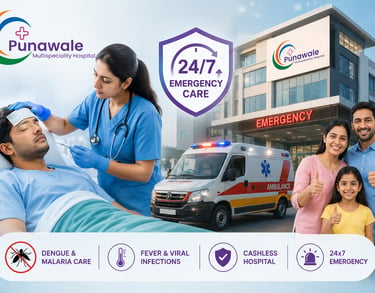
24x7 Emergency Care at Punawale Multispeciality Hospital
When illness strikes, timing is everything. At Punawale Multispeciality Hospital, our round-the-clock emergency team, advanced pathology labs, and intensive care units provide rapid testing for dengue NS1 antigen, malaria parasites, and complete blood counts (CBC).
We offer 24x7 emergency medical services and seamless cashless treatment across all major health insurance and TPA partners—ensuring your focus remains entirely on recovery rather than financial stress. Protect your loved ones today: at the first sign of persistent fever, consult our expert medical specialists immediately.
Protect Yourself from Dengue & Malaria: Prevention, Symptoms & When to Seek Medical Help
Monsoons and seasonal shifts bring relief from the heat, but they also bring a sharp rise in vector-borne diseases like dengue and malaria. Both infections are spread through mosquito bites and can quickly progress from mild body discomfort to life-threatening medical emergencies if left unchecked. Protecting your family requires proactive prevention, early detection, and knowing when to get expert care immediately.
Practical Expert Tips for Mosquito Prevention
Stopping mosquito breeding around your home is your first line of defense:
Eliminate Standing Water: Check coolers, flowerpots, open buckets, and discarded containers daily. Mosquitoes breed in stagnant clean or dirty water.
Use Insect Repellents: Apply DEET-based or natural repellents on exposed skin, especially during dawn and dusk when vector activity peaks.
Install Window Screens: Keep doors and windows fitted with fine mesh wire to prevent mosquitoes from entering living areas.
Dress Responsibly: Wear light-colored, full-sleeved shirts and full-length trousers when stepping outdoors.
Symptoms to Watch Out For
While both illnesses share overlapping symptoms, subtle differences exist:
Dengue Fever: Characterized by sudden high fever, intense pain behind the eyes, severe muscle and joint aches (often called "breakbone fever"), skin rashes, and sudden fatigue.
Malaria: Typically presents with recurring high fever cycles accompanied by severe chills, sweating, headaches, nausea, and vomiting.
Danger Signs: When to See a Doctor Immediately
Don't take fever lightly. Self-medicating with over-the-counter painkillers like ibuprofen can worsen dengue-related bleeding risks. Seek immediate emergency medical attention if you notice:
Persistent high fever lasting more than 48 hours
Severe, continuous abdominal pain or persistent vomiting
Bleeding from gums, nose, or skin bruising
Extreme drowsiness, confusion, or sudden drop in body temperature
Rapid drop in blood platelet counts or severe dehydration